
Overview
The US BCSD and World Business Council for Sustainable Development (WBCSD) launched the Energy Efficiency in Buildings Houston initiative in 2014 to support the development of ambitious and practical strategies for reducing building energy consumption by 30% or more in the Houston market. This initiative is also joined by the City Energy Project, which is supporting the City of Houston, along with nine other cities, to help cut energy waste in large buildings, make them healthier environments and more profitable investments through energy efficiency.
Process
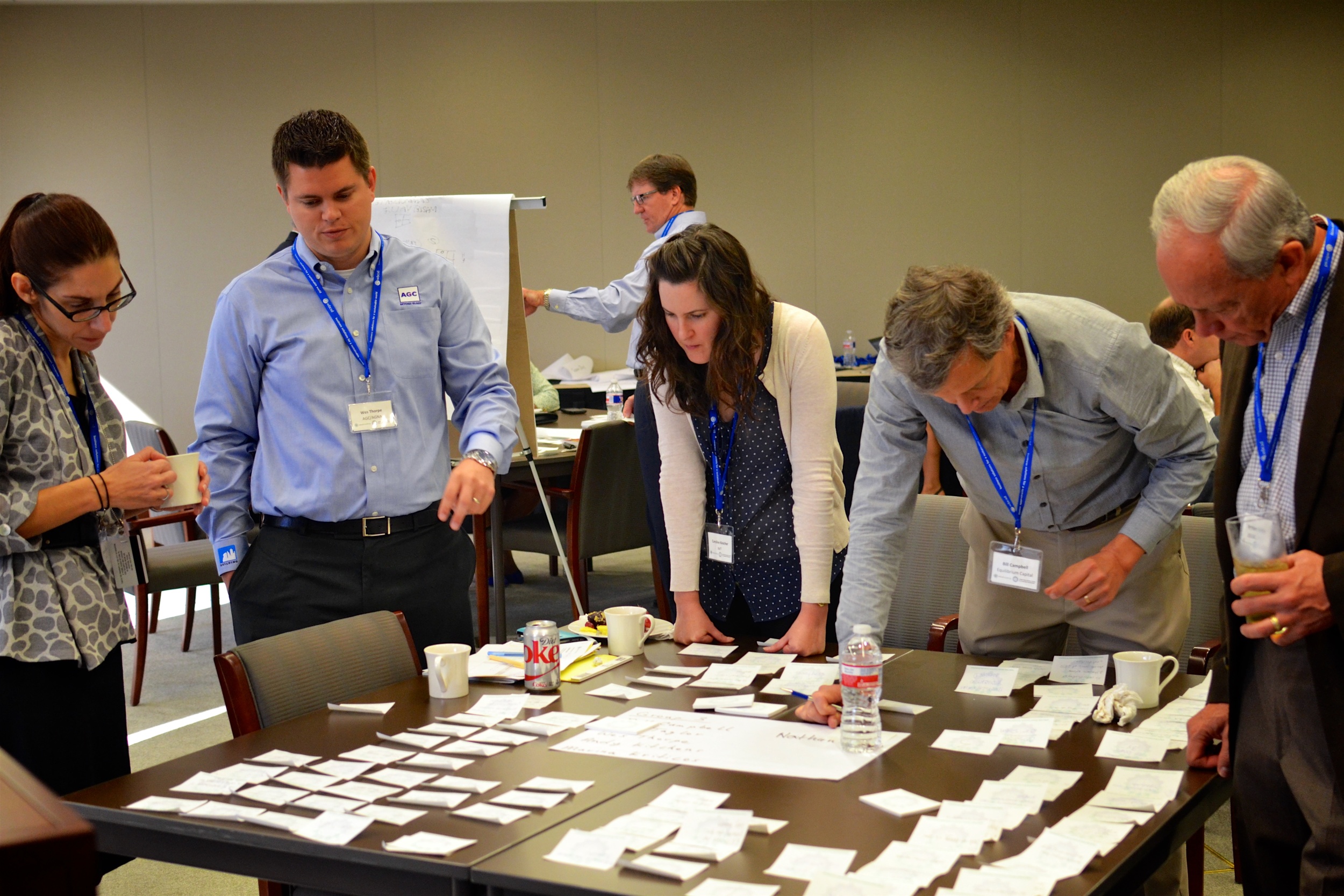
In early October 2014, the WBCSD and US BCSD hosted a deep-dive workshop to convene various stakeholders in Houston’s commercial building sector to diagnose and tackle key barriers to energy efficiency, recommend practical action plans for achieving market transformation to improve energy efficiency, and establish clearly defined stakeholder commitments. Results from this workshop led to the formation of this Energy Efficiency in Buildings – Houston platform and the ongoing efforts.
Path to Scale
Idea (2006 to 2010): The WBCSD’s EEB project looked into the building sector’s role within the international energy efficiency landscape.
Action (2010 to 2015): WBCSD launches the EEB 2.0 project in cities around the world to develop action plans and establish stakeholder commitments on EEB.
Scale (Present): multiple market engagements have taken place around the world, each pushing forward action plans to reduce building energy consumption.


Key Partners and Supporters:




KEY ACTION AREAS & ONGOING WORK in Houston
Communications
Objective: ensure the opportunities and benefits of EEB are appropriately communicated to all stakeholders, with the right message for the right audience.
Finance
Objective: identify EEB financing options and tools; and to develop strategies to promote, pilot and scale their use with building owners in the Houston area.
Operations
Objective: develop the capacity of building operators by ensuring they are appropriately trained and understand how to build an EEB business case to drive owners to action.
Policy
Objective: develop appropriate policies and regulations that can be effectively implemented in a non-regulated market to maintain competitiveness, and promote transparency and market activity.
Global Partners: US BCSD & WBCSD
Time to Amplify action in 50 cities by 2020
Global Partnerships
Partnerships are a key success factor in this approach, and WBCSD is proud to announce it has developed four partnerships with key partners in Europe, in the US and in India. In the USA, EEB Amplify will work with the US BCSD and U.S. Green Building Council (USGBC) to activate market activity in American cities building on the success of the EEB platform in Houston.
In Europe, Climate-KIC is joining forces with EEB Amplify through their Climate-KIC Building Technologies Accelerator (BTA). Together they will work across five cities in 2017 to boost demand for low-carbon building products and solutions (in Switzerland, France, UK, Germany and another country to be confirmed).
In India, the Green Building Council will bring the WBCSD approach to five cities - three cities in 2017 and two in 2018: Pune, Mumbai, Kochi, Ahmadabad and Goa. The goal will be to establish a local network on energy efficiency in buildings following the example of Jaipur, one of the WBCSD’s 10 pilot markets.
In November 2016 the WBCSD, and global partners including the US BCSD, announced a significant expansion to its project on energy efficiency in buildings.
The World Business Council for Sustainable Development (WBCSD) and its partners are launching EEB Amplify, a new phase of the project on energy efficiency in buildings, which will begin in 2017 and aims to expand to 50 cities by 2020.
WBCSD is proud to announce its partnership in Europe with Climate-KIC; the U.S. Green Building Council (USGBC) and US Business Council for Sustainable Development (US BCSD) in the USA; and the Indian Green Building Council (IGBC) in India.
EEB Amplify uses a proven business-led approach methodology to develop and implement action plans on energy efficiency in buildings. This methodology is set out in the Handbook on creating dynamic local markets for Energy Efficient Buildings released today.
Marrakech, 10 November 2016: Known as EEB Amplify, the expansion will begin in 2017 and aims to include 50 cities by 2020. EEB Amplify uses a proven business-led methodology piloted in 10 cities over the last four years to develop and implement action plans on energy efficiency in buildings.
Buildings are one of the largest end users of energy, consuming a third of global final energy and creating a fifth of all greenhouse gas emissions. Population growth, urbanization and household wealth are all rising and energy use in buildings may double and possibly triple by 2050. If widely adopted, current best practices and technologies could halve this amount by 2030, which will be necessary if we stand any chance to fulfill the Paris Agreement.
Eleven WBCSD member companies have invested over US$4M to demonstrate that their engagement framework can effectively increase market activity for energy efficient buildings – and promote sustainability and business opportunities. EEB Amplify will use this business-led approach, piloted in 10 markets over four years and captured in this Handbook on creating dynamic local markets for Energy Efficient Buildings.
Five EEB platforms have been set up so far in Houston, Warsaw, Jakarta, Jaipur and Shanghai. EEB Amplify is endorsed by the Sustainable Buildings & Construction Program of the UN 10 Year Framework of Programs on Sustainable Consumption and Production (10YFP SBC) and will be led by WBCSD in partnership with other program partners including: LafargeHolcim, United Technologies, AkzoNobel, ArcelorMittal, Arcadis, ENGIE, Infosys, Schneider Electric, SGS, Siemens, and Skanska.

